Research writing13 min read
Thesis writing
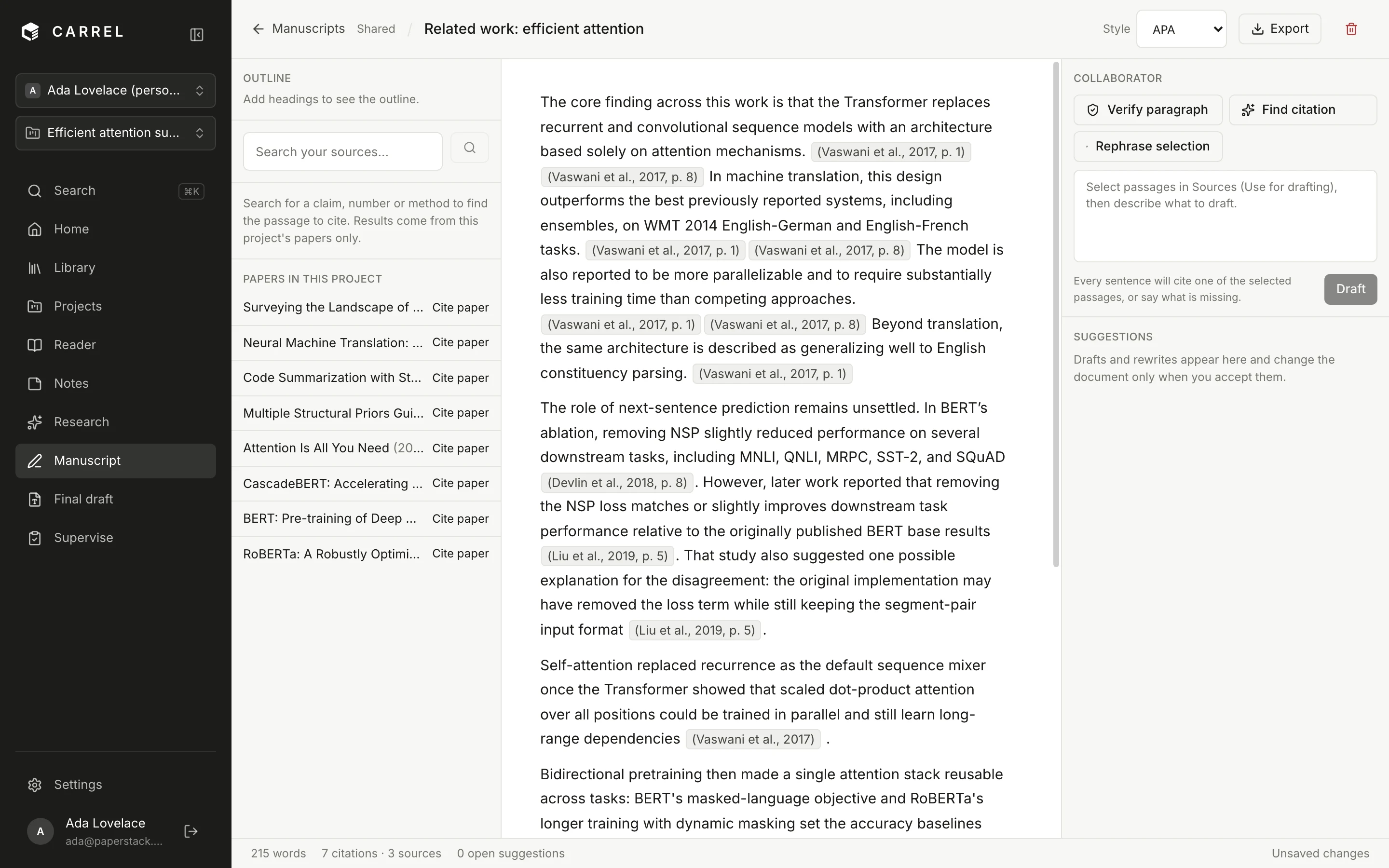
Carrel is thesis writing software for researchers who have done the reading: it proposes a structure from the evidence in your library, drafts each section from the passages behind it, keeps every citation a link to the page, and exports a Word file your supervisor can mark up.
Thesis writer’s block rarely comes from not knowing enough. It comes from knowing a great deal that has not yet been arranged into an argument, so every sentence feels premature and every paragraph sends you back to the folder to check.
The blank page is a structure problem, not a motivation problem. Once the claims are visible, with the evidence for and against each of them, there is something to write about and something to check it against. The draft becomes a way of testing the argument rather than a performance of certainty.
How it works
01Start from a structure, not a cursor
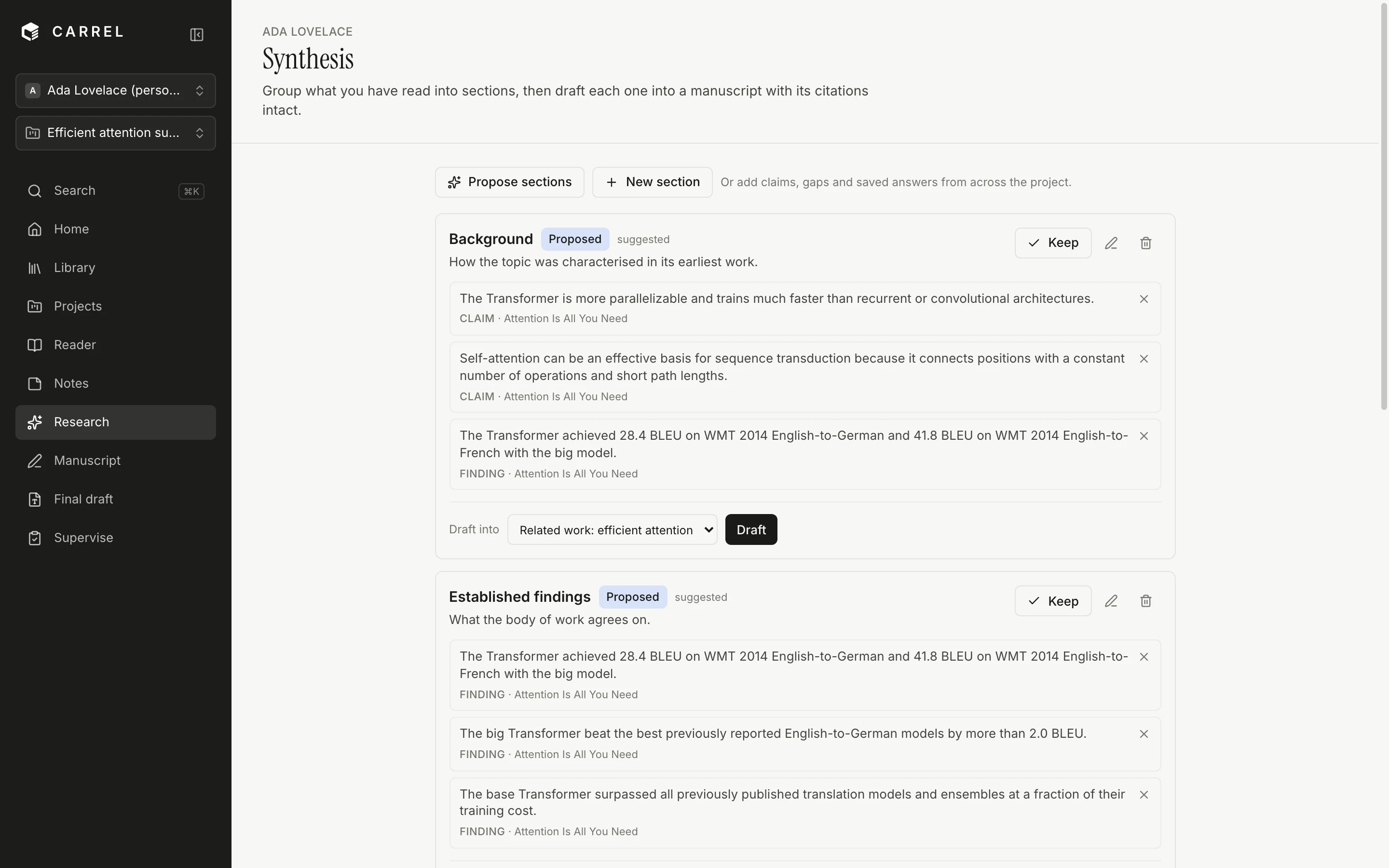
Carrel proposes sections from what you have actually read and fills each with the claims, answers and passages behind it. It is a starting outline, built from your evidence, that you rename, merge and argue with.
02Draft a section with its citations attached
Pick a section and Carrel drafts it from your passages only, arguing where the papers disagree. Each claim carries a citation that opens the paper at the page, so the first draft arrives checkable.
03Write, and let the evidence push back
Because a citation is a link rather than text, the sentence and its source can be compared. Tighten a paragraph until it no longer says what the passage said and Carrel flags it; you open the passage and decide.
04Hand it over in Word
Export a .docx whose tracked changes open as tracked changes, attributed to the right person, so your supervisor marks it up the way they always have. LaTeX, Markdown and BibTeX come out too, in APA, MLA, Chicago, IEEE or Nature.
The method, without the product
Research writing13 min read
Why the block is a structure problem, and the smallest piece of thinking to make visible first.
Synthesis13 min read
If the draft keeps turning into one summary after another.
Research writing13 min read
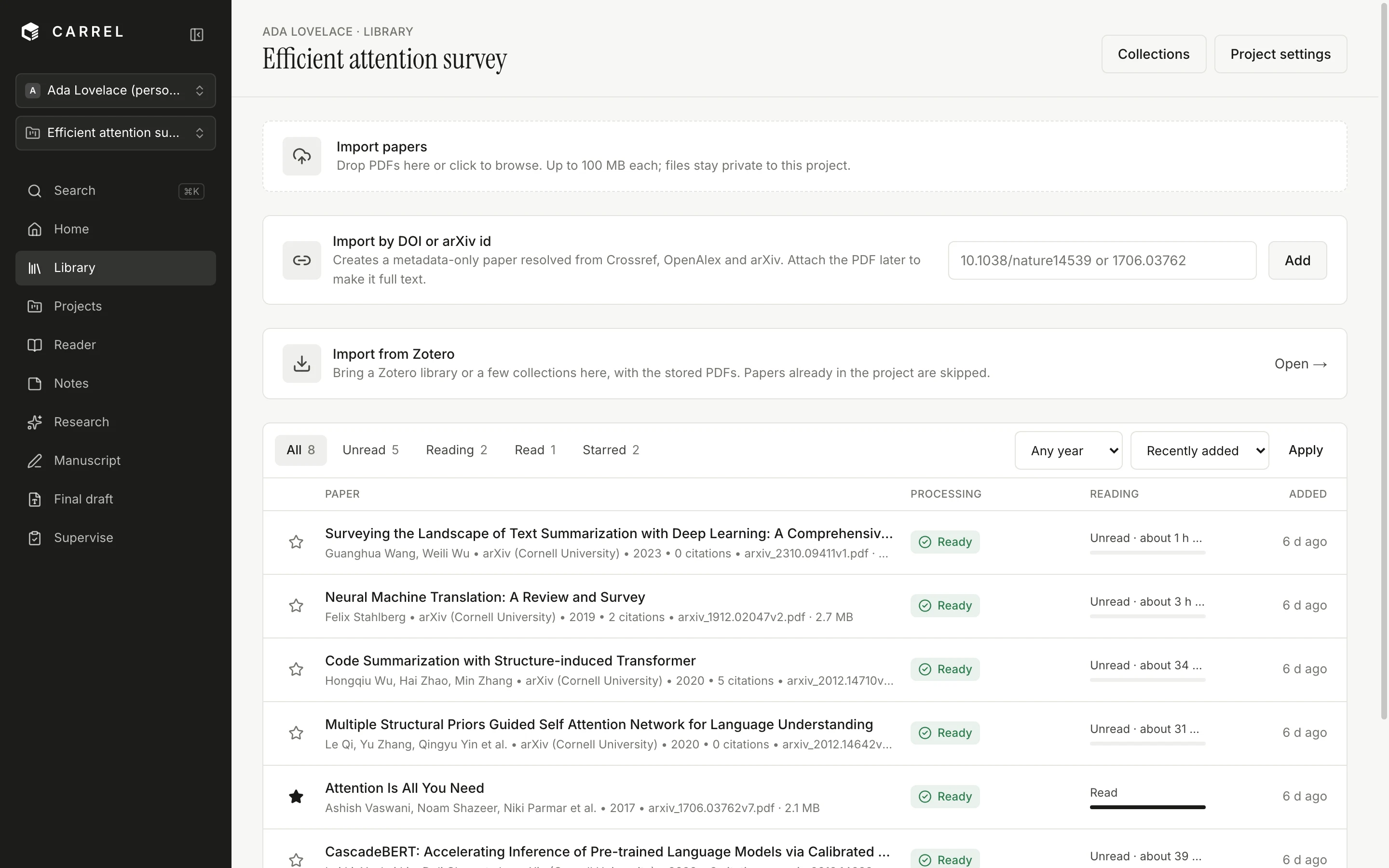
If you still do not know what to read or where the review begins.
More in the full FAQ.