Research writing13 min read
Literature review
Carrel is a literature review tool for PhD and master’s researchers: import the papers you have, extract the claims with their passages attached, see where the papers agree and disagree, and draft each section with citations that open the source.
Finding the papers is the part that works. The review stalls afterwards: forty PDFs read, a notes file that stopped being useful around page four, and a chapter that is still one summary after another because nothing shows how the papers relate.
A literature review is not a list of what each paper found. It is an argument about what the field knows, where it disagrees with itself and what it has not yet answered, with the evidence for each of those attached. The work in between is holding all of that in view at once, and that is the work most tools skip.
How it works
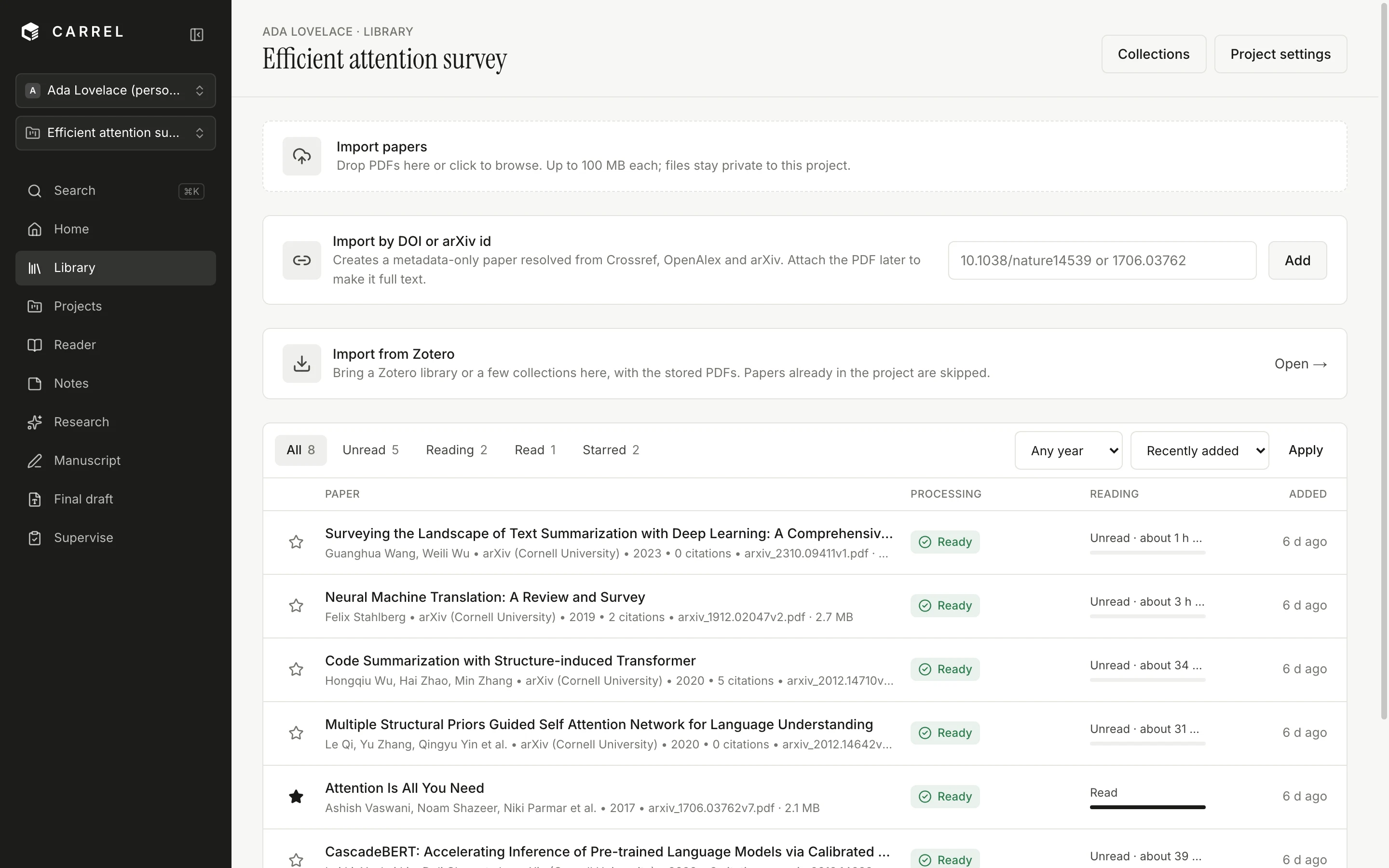
01Bring in the papers you already have
Import a Zotero library or a few of its collections, drop in PDFs, or paste a DOI or an arXiv id. Metadata is filled in from Crossref and OpenAlex, and every paper is parsed into passages you can search, read and cite.
02Read properly, and ask the papers
Highlight, keep notes on the page, and ask questions that are answered only from your own library. Every sentence of an answer carries a citation that opens the paper at the passage, and when the evidence is not there you are told so instead of guessed at.
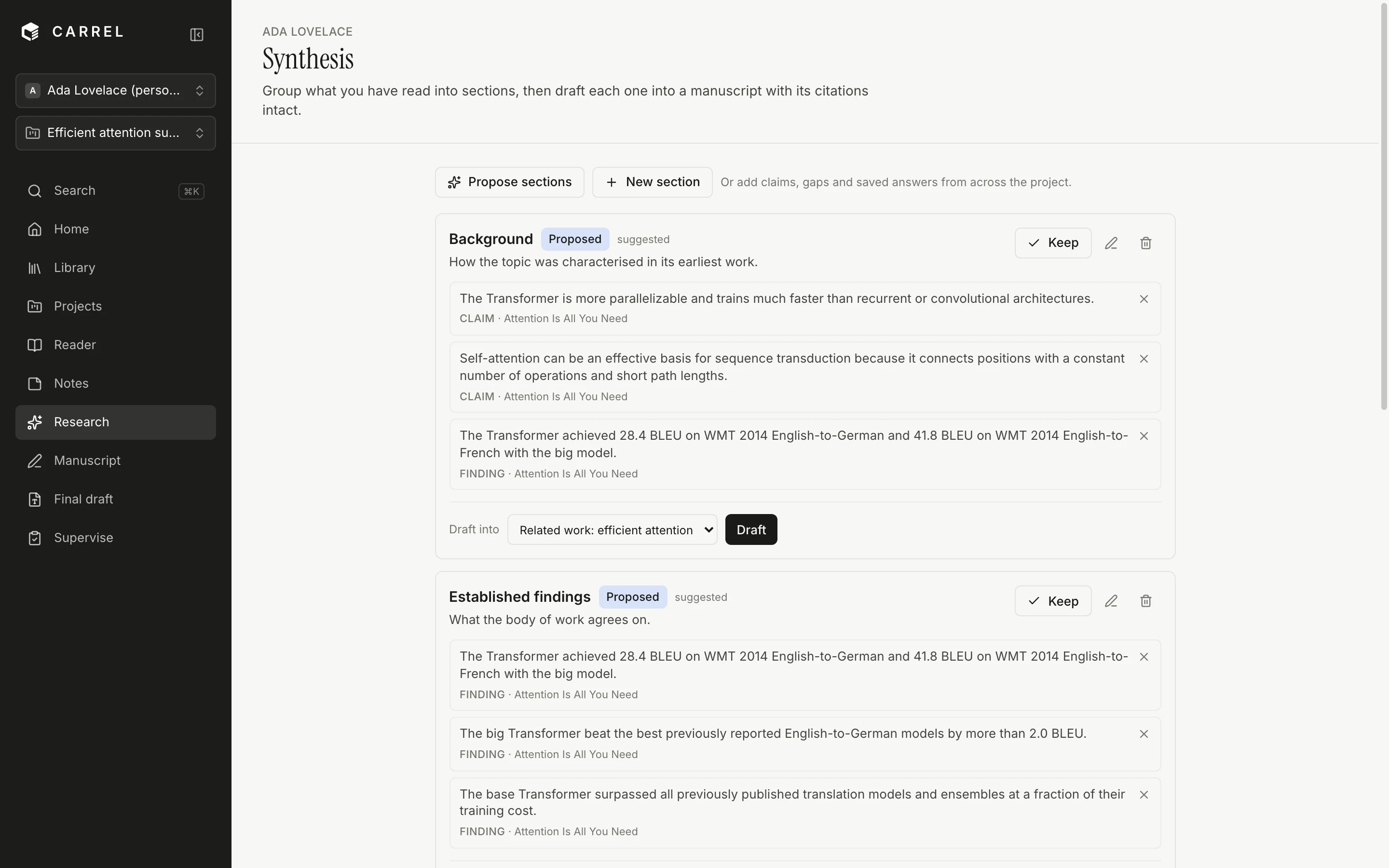
03Extract the claims, not just the papers
Claims, methods, findings and limitations come out of each paper with their exact quotes attached. They are the unit a review is built from, and each one keeps its link back to where it was said.
04See agreement, contradiction and the gap
Claims are linked by what supports, contradicts, qualifies or extends what. The synthesis matrix your supervisor keeps asking for arrives filled in, and the places where nobody has an answer are flagged.
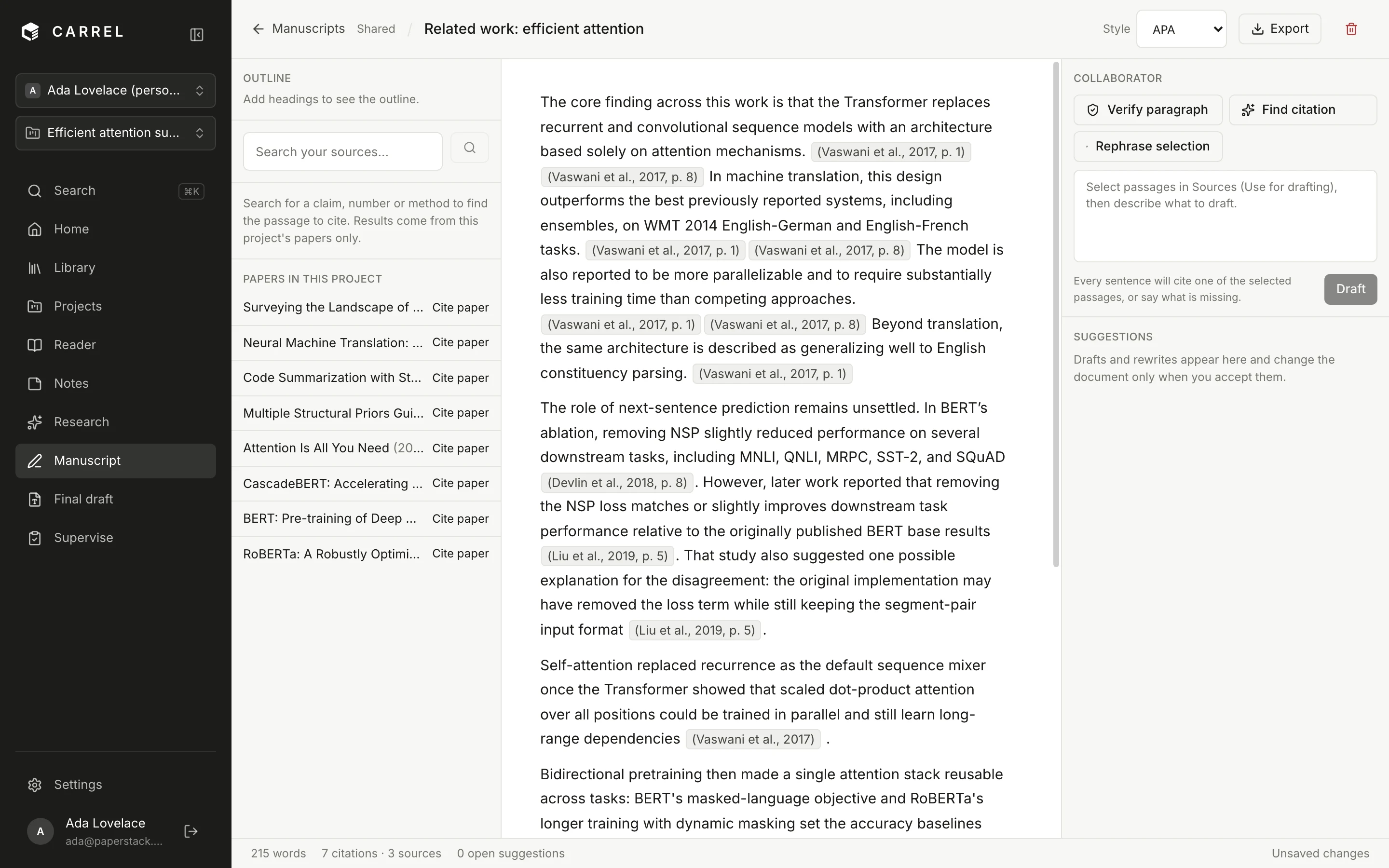
05Draft each section from its evidence
Carrel proposes sections from what you have read and drafts each one from the passages behind it, arguing where the papers disagree. Rewrite it, cut it, and export to Word, LaTeX or Markdown with the citations intact.
The method, without the product
Research writing13 min read
Where to begin when the folder is full and the page is blank.
Synthesis13 min read
How to write about what the papers say together, instead of one at a time.
Research writing13 min read
What to do when the reading is done and the writing will not start.
More in the full FAQ.