Synthesis13 min read
Research synthesis
Carrel is a research synthesis tool that extracts claims, methods and findings from your papers with their source passages, maps what supports, contradicts or qualifies what, and turns those relations into sections you can draft from.
Reading forty papers produces forty summaries. Synthesis is the different job of saying what they establish together: which finding holds across studies, which two results cannot both be true, and which condition explains why they differ.
That job fails for a mundane reason. The unit you need while writing is smaller than a paper, a claim or a finding or a limitation, and the relations between hundreds of them will not stay in anyone’s head. So the draft falls back to one paper per paragraph, and the review lists instead of arguing.
How it works
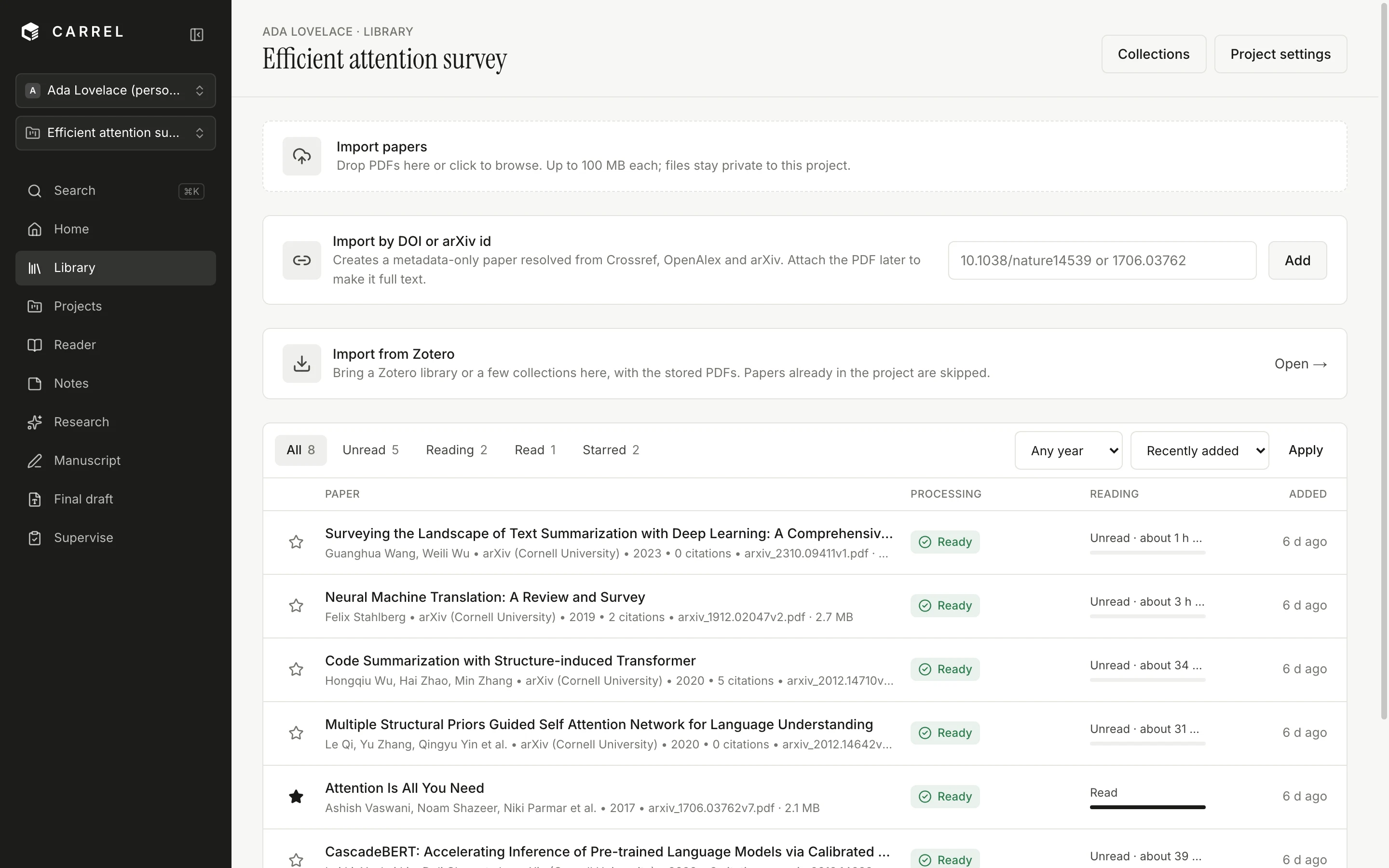
01Extract the claims with their passages
Each paper gives up its claims, methods, findings and limitations, each with the exact quote behind it. Accept, edit or reject them; the model’s original is kept for audit, and the passage is one click away.
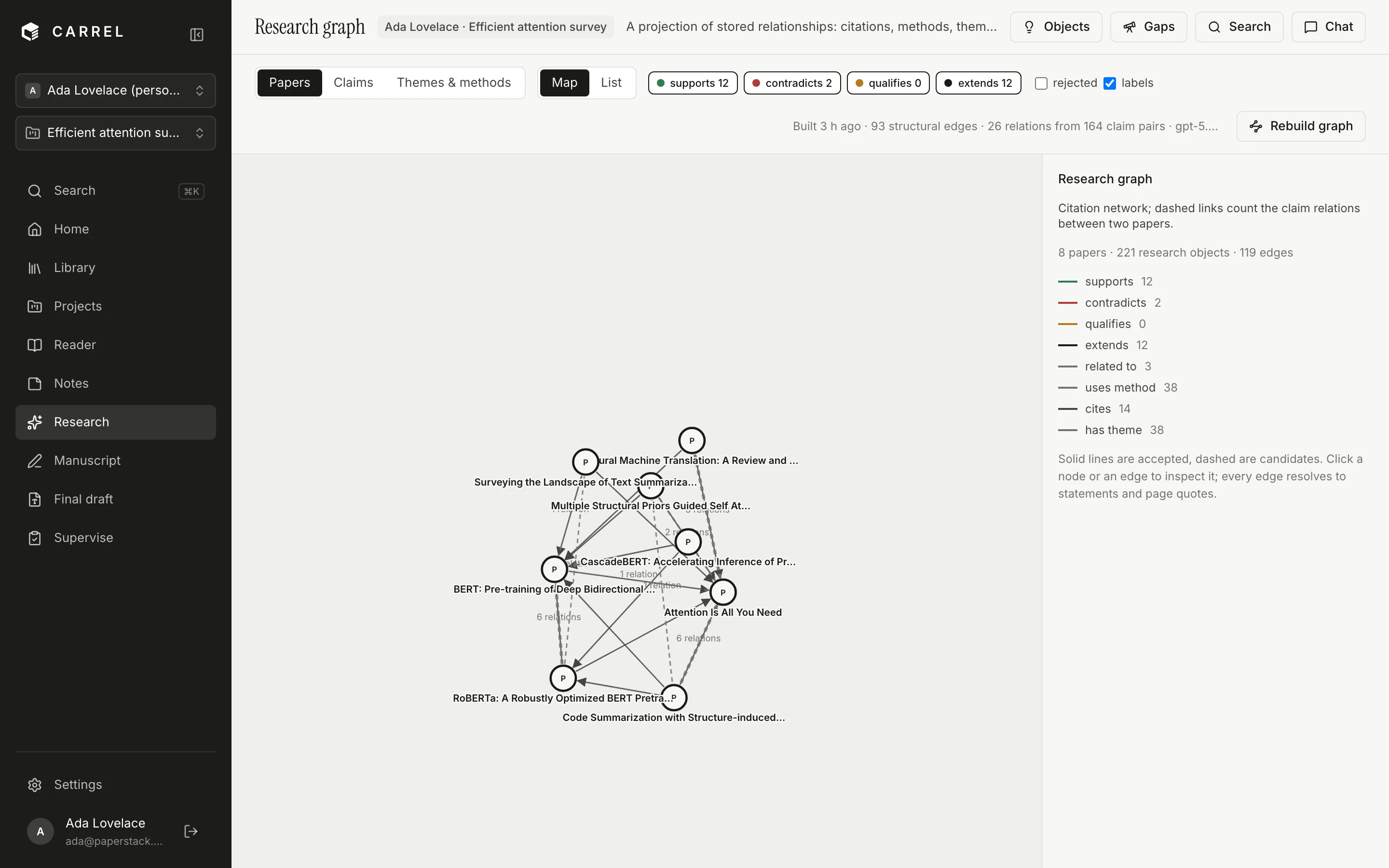
02Link what supports, contradicts or qualifies what
Carrel proposes relations between claims and you judge them. What emerges is the synthesis matrix drawn as a graph: agreement, conflict, and the conditions that explain the conflict.
03Find the gap the evidence points to
Where the claims run out, where two findings conflict with nothing to resolve them, where a method has never met a population. Candidate gaps are flagged from the structure rather than announced in the last paragraph.
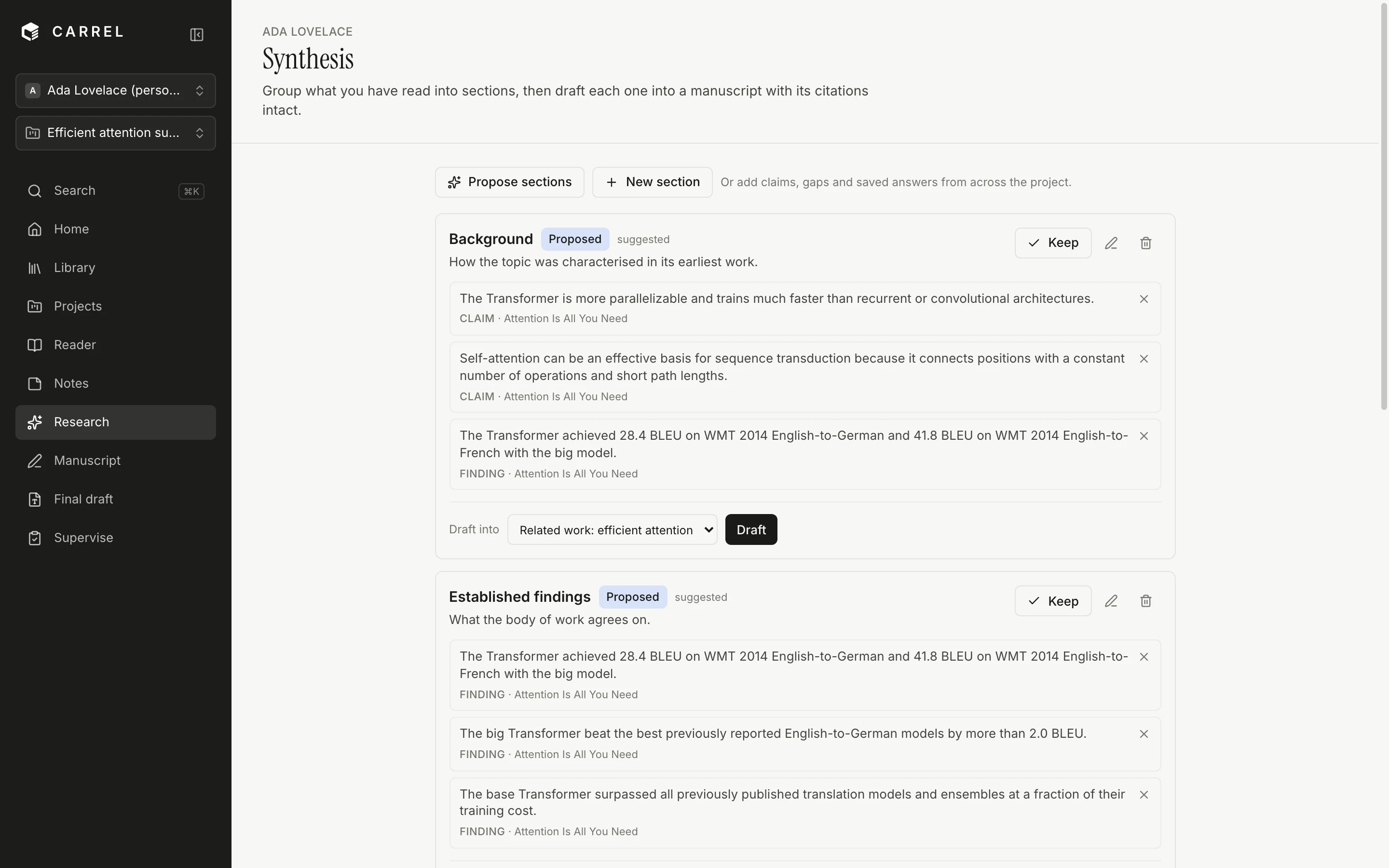
04Turn the structure into sections
Background, what the field agrees on, where it contradicts itself, where the gap is: Carrel proposes the sections and fills each with the claims and saved answers behind it. Rename them, merge them, throw out what is wrong, then draft.
The method, without the product
Synthesis13 min read
The method, with before-and-after examples of a paragraph that argues instead of lists.
Research writing13 min read
If you are still collecting papers and do not yet have a working set.
Research writing13 min read
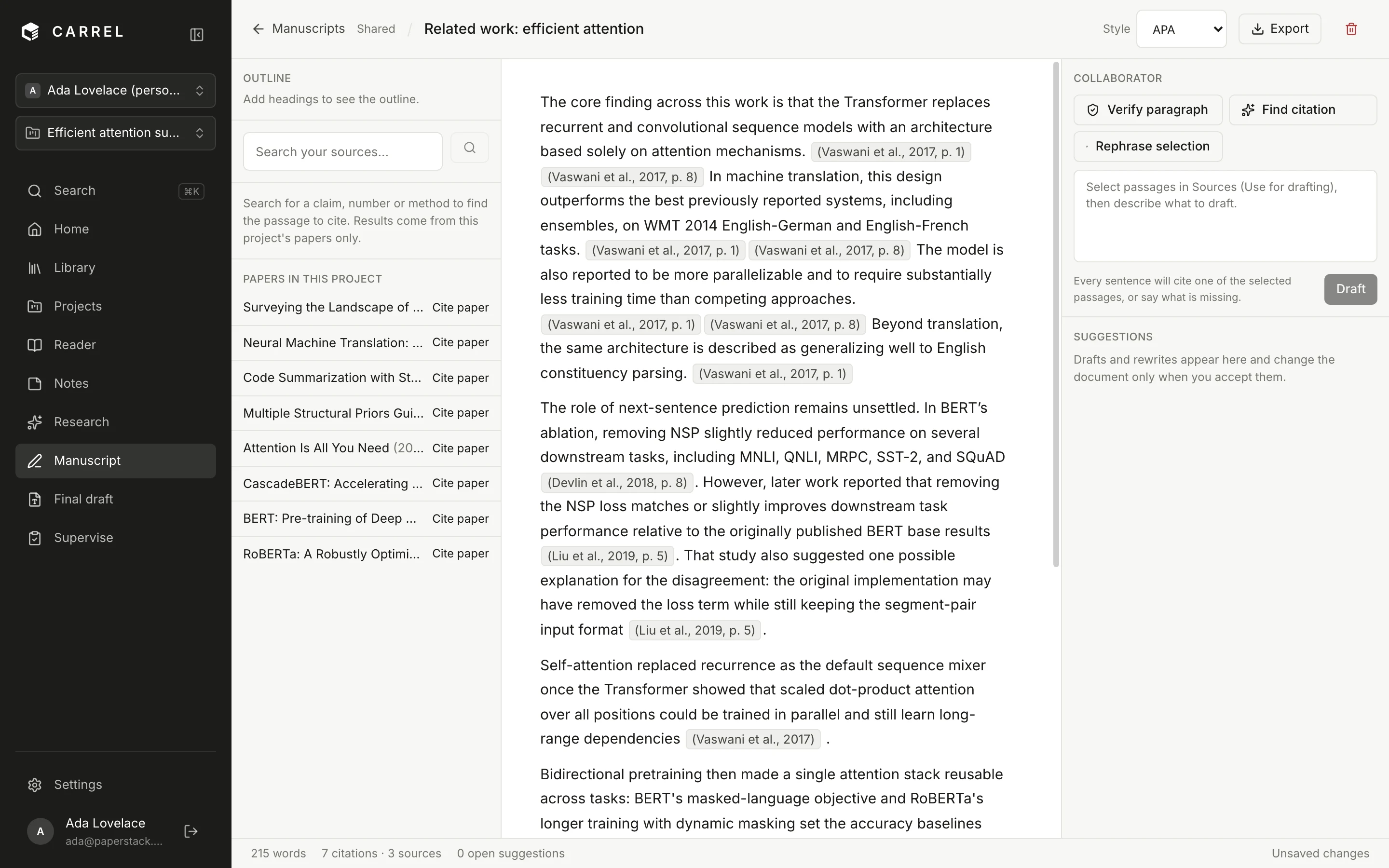
If you understand the themes but still cannot get words onto the page.
More in the full FAQ.